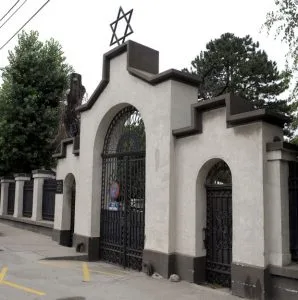


The Sephardic Jewish cemetery in Belgrade, as the only active Jewish cemetery in the city, along with the Ashkenazi Jewish cemetery, represents an important cultural and historical entity that testifies to the centuries-old existence and life of the Jewish community in Belgrade.
Based on written sources and the remains of discovered gravestones, it is known that Jews already had a burial space on the Sava slope in the 16th century, at the site of today's Obilićev venac. Shortly thereafter, another Jewish cemetery was established, known as the Old Sephardic Cemetery, which was located in the area of today's Dalmatinska and Đušina streets and was in use for a full three centuries.
The Old Sephardic Cemetery was closed in 1928, when an urban planning project envisioned the construction of wide boulevards and a park. Due to a lack of burial space, the Sephardic Church-School Jewish Community purchased land in what was then Grobljanska Street, now Mije Kovačevića Street, or Roosevelt Street, for the needs of a new cemetery in 1888.
Today, the monumental fund of the Sephardic cemetery consists of about 3,000 gravestones, including some monuments transferred from the Old Sephardic Cemetery. They represent not only a rich artistic whole but also an invaluable source of data for studying the history of the Jewish community in Belgrade. Numerous individual monuments stand out for their decorative richness, especially family tombs. One of the most monumental is the tomb of the Buli family.
A unique feature of the cemetery is the monument over the grave of the book – the genizah, with a dominant relief scroll of the Torah on which there is a Hebrew inscription with the following content: "At this place are stored and buried the holy Torahs, mezuzahs, tefillin, prayer shawls, prayer books, and all holy objects that have worn out, as we have been taught by our fathers and teachers, may their memory be blessed."
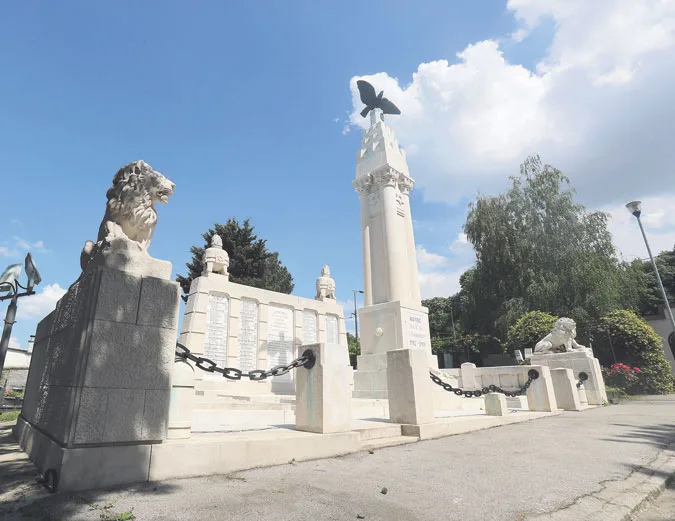
Within the cemetery, monuments have also been erected dedicated to the victims of liberation wars and innocent victims: The Monument to Fallen Jewish Warriors for the Salvation, Freedom, and Unification of the Homeland 1912–1919, The Monument to Jewish Victims of Fascism, The Monument to the Victims of the Kladovo Transport, dedicated to Austrian Jews killed in 1941 in Zasavica near Šabac, as well as The Monument to Children who Died after World War I from Spanish Flu and other diseases.
Within the cemetery, a chapel was built in 1934, according to the project of engineer Josif V. Albale.
The Ashkenazi cemetery is located on Roosevelt Street, across from the Sephardic cemetery, and is part of the Belgrade New Cemetery, from which it is separated by a wall. The preparations for this cemetery were carried out simultaneously with the purchase of land for the Belgrade New Cemetery, which was established in 1876. Today, no burials are performed at the Ashkenazi cemetery.
Jewish Cemetery
Mije Kovačevića 1, Belgrade
Working hours: every day from 8 AM to 7 PM (from 8 AM to 5 PM from October 1 to March 31), except on Saturdays.
Contact phone of the maintenance employee: 060/600 10 21
Ashkenazi Cemetery
Roosevelt 50, Belgrade
Regulations on the Work of Hevra Kadiša and the Cemeteries of the Jewish Community
Today, this is the only Jewish cemetery in Belgrade where burials are performed. In addition to maintaining and protecting the existing monumental complex, there is also a need for its expansion. Significant results have been achieved in the process of arranging and expanding the Jewish cemetery in Belgrade in cooperation with the City of Belgrade and the Republic of Serbia.